The best meal of your Puerto Rico trip might not come from the restaurant with the biggest sign, the most polished patio, or the longest online waitlist. It may be at a roadside kiosk where the grill is smoking before noon, a family-run counter with a handwritten menu, or a neighborhood spot where Spanish fills the room and the regulars know exactly what they want. To find authentic local restaurants, start by looking beyond the tourist strip and let the island’s daily rhythm lead you.
Puerto Rican food is not one single experience. It changes from the coast to the mountains, from a quick fritura stop to a long Sunday lunch with family. The real magic is in tasting the places locals return to when they are hungry, celebrating, or simply taking a break from the day.
What Authentic Means on the Island
Authentic does not have to mean hidden, tiny, or difficult to reach. A popular restaurant can still be deeply local if it cooks with care, serves dishes people on the island actually love, and feels connected to its neighborhood. At the same time, a menu full of tropical decorations and generic island references is not automatically a local experience.
Look for food with a clear Puerto Rican point of view. That can mean mofongo mashed to order with garlic and broth, arroz con gandules alongside roasted pork, alcapurrias fresh from the fryer, or a plate of fish caught close to the coast. It can also mean a simple pan sobao breakfast, a cold piragua on a hot afternoon, or a cup of locally roasted coffee after an adventure day.
The setting matters, but the people matter more. When the person taking your order can tell you what came in fresh, what their family recommends, or why a dish is prepared a certain way, you are already closer to the Puerto Rico we are proud to share.
How to Find Authentic Local Restaurants
Start with the question locals ask each other: where do you go for this? Not where is the best restaurant in general, but where do you go for roast pork, seafood, breakfast, frituras, or mofongo? Specific questions get specific answers, and specific answers are usually where the good meals begin.
Ask your hotel staff, tour guide, bartender, driver, or the person behind the counter at a local coffee shop. Tell them what you want and how far you are willing to go. Say you are looking for a relaxed lunch after El Yunque, a place with music and energy near San Juan, or a no-frills stop for authentic frituras. Most Puerto Ricans are happy to point you toward a favorite when they know what kind of experience you want.
Online reviews can help, but read them with a local eye. Look past the star rating and check the photos. Are people posting plates of arroz con gandules, tostones, pastelillos, and daily specials? Do reviews mention the owner, the portions, the flavor, or a dish people return for? Those details say more than a polished dining room photo ever will.
Follow the Daily Specials
A short menu is often a good sign, especially when it changes with the day. Many neighborhood restaurants and roadside spots cook what is available, what is in season, and what the kitchen does best. If there is a chalkboard listing the day’s soup, stew, fish, or meat special, pay attention.
Ask what is popular that day rather than ordering the first familiar item you recognize. Maybe it is a hearty asopao, a slow-cooked carne guisada, or a fresh catch served with rice and beans. The answer may depend on the hour, the weather, or what the cook brought in that morning. That is part of the experience.
Go Where the Island Eats
Timing can lead you to great food. Breakfast counters are busiest early, lunch spots often come alive around midday, and roadside kiosks can be the move after a beach day. On weekends, families gather for long meals, while nightlife areas fill up later with small plates, music, and cold drinks.
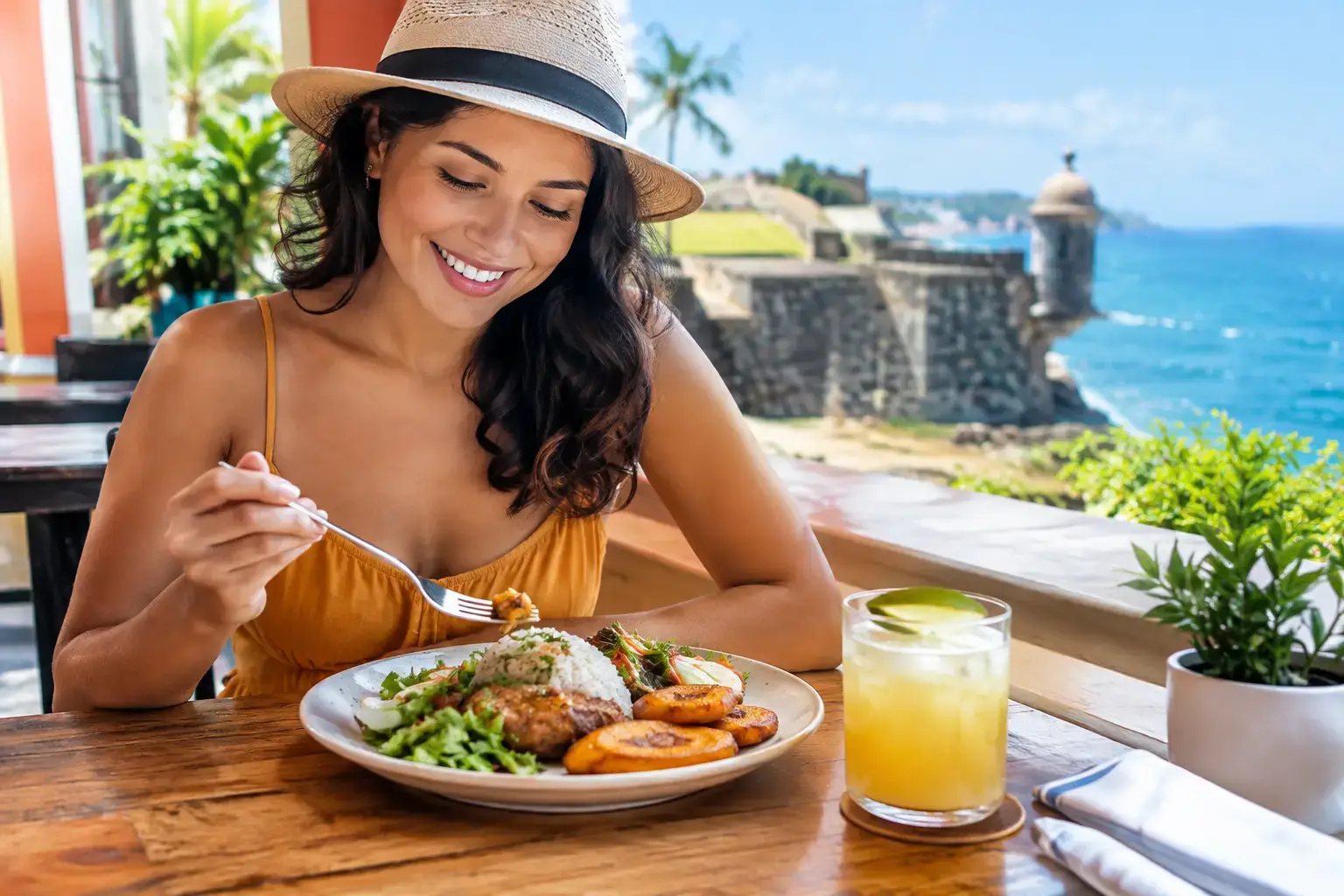
Do not skip the places that look casual. A lechonera in the mountains may serve some of your most memorable food on the island, especially if you arrive while the pork is being carved. Along the coast, a kiosk with plastic chairs and a line of locals may be exactly where you want to stop for bacalaítos, empanadillas, or a seafood plate with a view.
If you are exploring Luquillo, Piñones, the mountain towns, or neighborhoods beyond Old San Juan, build time into your day for an unplanned food stop. The trade-off is that service may be slower than at a high-volume tourist restaurant, and hours can be more flexible. But when a meal is made fresh and the kitchen is moving at its own pace, slowing down is worth it.
Know a Few Dishes Before You Order
You do not need to become an expert before you arrive, but recognizing a few classics helps you order with confidence. Mofongo is a savory mashed plantain dish often served with seafood, chicken, pork, or vegetables. Tostones are crispy fried green plantains, while amarillos are sweet ripe plantains. Arroz con gandules is a beloved rice dish with pigeon peas, often served alongside pernil, Puerto Rican-style roast pork.
For a quick snack, look for frituras. These are the golden, fried favorites you will find at kiosks and beachside stands: alcapurrias made with a root vegetable dough and filling, bacalaítos with salted cod, and pastelillos filled with meat, cheese, or seafood. They are not fancy, and they are not trying to be. Order a few to share, add a cold drink, and enjoy them while they are hot.
Puerto Rico also has excellent fresh fruit, coffee, and desserts. If you see tembleque, flan, bread pudding, or coconut treats, make room. A great local meal does not always need a grand finale, but it rarely hurts.
Eat With Curiosity and Respect
The easiest way to have a more local food experience is to be open without treating the restaurant like a checklist. Ask for recommendations. Try the house sauce if it is offered. If a dish is unfamiliar, ask how it is prepared and whether it has spice, seafood, or pork. Clear questions are welcome, especially when they come from genuine curiosity.
A little Spanish goes a long way, even though many people in visitor areas speak English. Buen provecho is a warm way to wish someone a good meal. Gracias and por favor are always appreciated. Most of all, be patient. Family-run kitchens, kiosks, and small neighborhood spots may not run on the rushed schedule you are used to back home. That is not a flaw. You came to experience Puerto Rico, not just consume it quickly.
Also remember that authenticity is not a performance. Do not expect every local spot to look picture-perfect or to explain every dish in English. Some of the best tables feel special because they are simply serving their community first. Be a good guest, support the businesses you enjoy, and let the meal be what it is.
Let a Local Guide Shorten the Search
There is nothing wrong with researching restaurants, but vacation time is valuable. After a waterfall hike, a natural waterslide adventure, or a full day exploring caves and beaches, knowing exactly where to eat can turn a good day into a story you keep telling.
That is why local guidance matters. A guide who grew up here knows which roadside stop makes sense after the rainforest, where to find a proper lunch between adventures, and when a famous food spot is worth the line. With Share Puerto Rico, the same local perspective that leads guests to hidden places can also point you toward food that feels connected to the area, not copied from a travel brochure.
The best restaurant recommendation depends on your day. If you want a quiet meal with mountain views, your answer will be different than if you are headed to La Placita for music and late-night energy. Let the location, timing, and mood guide you.
Save room, stay curious, and follow the smells coming from the kitchen. Puerto Rico has plenty of beautiful views, but some of the strongest memories are made around a table where the food tastes like someone made it for their own family.