
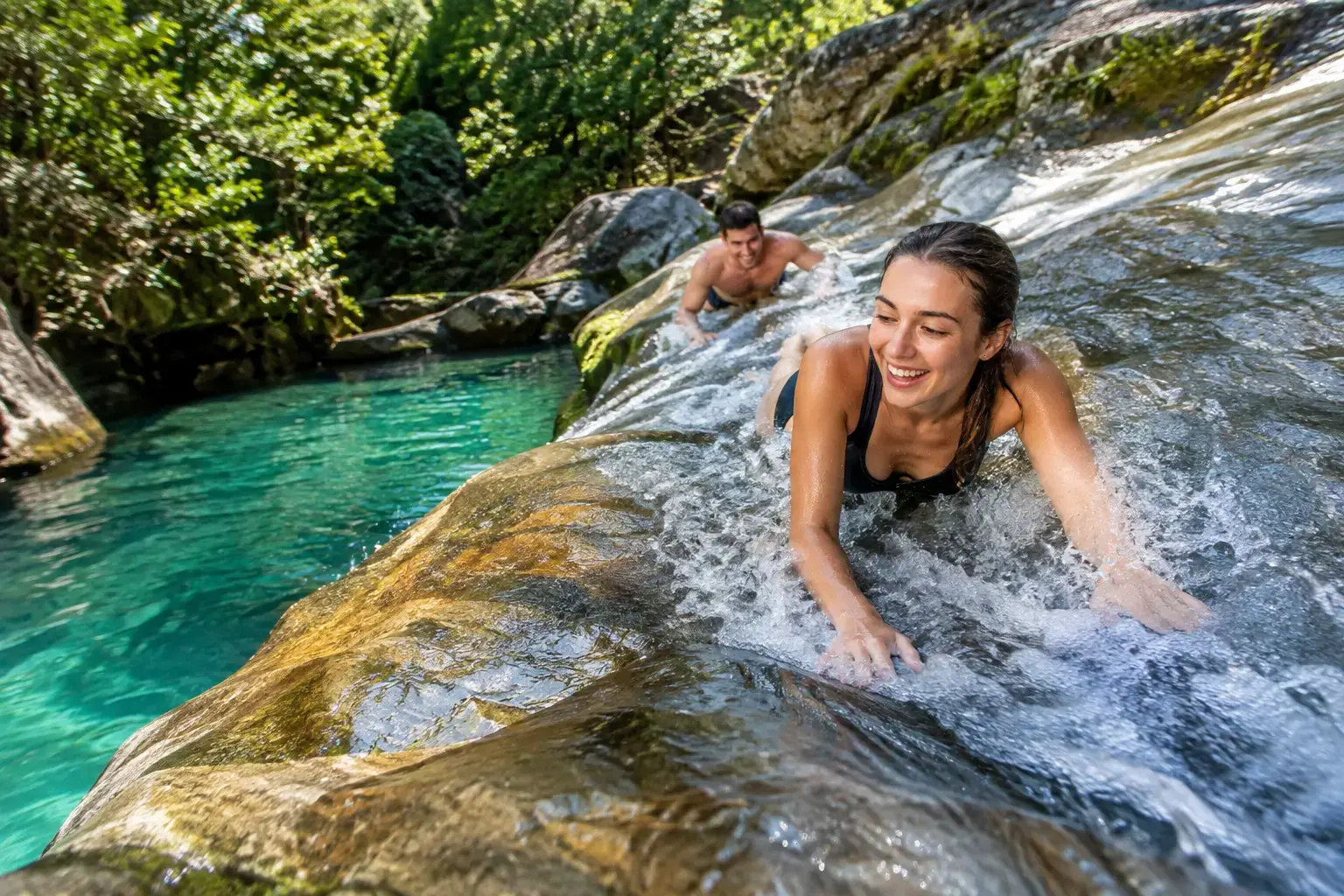
A natural waterslide can look like the happiest accident in the rainforest: smooth stone, cool water, a splash pool below, and your friends cheering from the bank. But to safely navigate natural waterslides, you need more than confidence and a camera-ready swimsuit. You need to read the water, respect the rock, and know when a beautiful spot is not the right spot to slide.
In Puerto Rico, especially around El Yunque and other lush mountain areas, water changes fast. A route that feels playful on a clear morning can become slick, crowded, or unsafe after a short burst of rain upstream. The best adventures still feel wild, but the smart choices behind them are never random.
Start With Conditions, Not the Slide
Before anyone sits down at the top, pause and look at the entire run. Natural waterslides do not come with lifeguards, depth markers, or a maintenance crew. Their shape, speed, and landing pool can change with rain, fallen branches, loose rocks, and shifting sediment.
Watch the water for a few minutes. Is it flowing steadily, or surging in irregular bursts? Is the slide carrying a shallow sheet of water, or a fast current that could push someone off line? If the flow feels stronger than expected, treat that feeling as useful information. A natural slide is supposed to be fun, not something you have to fight.
Rainfall matters even when the sky above you looks clear. Mountain rain can fall higher in the watershed and reach your location quickly. If water becomes muddy, rises noticeably, or starts carrying leaves and debris, get out of the water and move away from the streambed. Flash flooding is one risk you do not negotiate with for a photo.
Check the Run and Landing Pool
The biggest mistake travelers make is assuming a polished-looking rock chute is automatically safe. Before sliding, a knowledgeable person should check the path and the pool below. That means looking for exposed rock, branches, sharp edges, shallow sections, and other swimmers in the landing zone.
Depth is especially tricky. Clear water can make a pool look deeper than it is, while dark water can hide rocks beneath the surface. Never dive into a natural pool unless a qualified local guide has confirmed it is appropriate. In many cases, entering feet first is the only sensible choice.
You also need a clear exit. A splash pool is not useful if the far side has a strong current, slippery boulders, or no easy place to stand. Look for where you will go after you land, not just where you will land. If you cannot see a safe exit, skip it.
Wear Gear That Helps You Move
Flip-flops are perfect for a beach bar and terrible for wet rock. Closed-toe water shoes with real grip protect your feet from uneven stone and help you keep balance during creek crossings. They should fit securely enough that they will not float away on the first splash.
A swimsuit or quick-dry clothing is ideal, but avoid loose items that can snag. Leave sunglasses, hats, phones, and unsecured jewelry with a friend or in a dry bag before your turn. Natural pools have claimed plenty of vacation accessories, and searching underwater near moving water is never worth it.
For longer rainforest adventures, bring drinking water, a small towel, dry clothes for afterward, and reef-safe sunscreen for exposed areas. Hydration still matters in the rainforest, even when you are spending half the day in cool water.
Use the Right Body Position
A natural waterslide is not the place for standing, spinning, or trying a stunt you saw online. Sit low, keep your feet pointed forward, and lean back slightly so your weight stays centered. Your hands should be close to your body rather than reaching out to grab the rock. Trying to stop yourself with your hands can lead to scraped palms, jammed fingers, or a sudden twist.
Wait until the landing pool is completely clear. Go one at a time, and give the person ahead of you enough space to move to the exit before the next rider starts. Your group may be excited, but spacing is part of taking care of one another.
If the route calls for a jump rather than a slide, do not assume the same rules apply. Jumping adds impact, depth requirements, and more variables. Only jump where a trusted guide has specifically said it is safe that day, and follow the exact entry instructions. A spot that worked yesterday may not work after rain.
Know When Not to Slide
The local secret is not always finding a hidden place. Sometimes it is knowing when to leave it alone. The most experienced guides make conservative calls because they understand how quickly Puerto Rico’s mountain terrain can change.
Skip the waterslide if any of these conditions show up:
- Recent or active heavy rain, muddy water, rising water, or debris moving downstream.
- A landing pool you cannot assess for depth, obstacles, or a safe exit.
- Strong currents that pull across the slide or continue forcefully through the pool.
- Polished rock with no stable approach, especially if you are already slipping while walking.
- Alcohol, fatigue, dizziness, an injury, or pressure to do something outside your comfort level.
That last point deserves respect. Adventure should never become a performance. You do not need to slide, jump, or climb simply because the rest of your group is doing it. The best travel memories are the ones you are healthy enough to laugh about over dinner.
Why Local Guidance Changes the Experience
Maps can point you toward a rainforest, but they cannot tell you which access routes are currently passable, where private land begins, or how this week’s weather has changed a river. That knowledge comes from people who spend real time in these places and understand the rhythms of their home.
A small-group guided experience takes pressure off your shoulders. Instead of guessing at trail conditions, parking, water levels, and safe entry points, you can focus on the rush of cold water, the green canopy overhead, and the people sharing the day with you. A good guide also knows when the plan needs to change. That flexibility is not a disappointment. It is part of responsible adventure.
At Share Puerto Rico, our local family guides lead guests with the kind of care we would want for friends visiting our island. Small groups mean you are not being rushed through a crowded checklist. You get clear direction, room to ask questions, and a more personal way to experience the rainforest.
Respect the Place That Gives You the Adventure
Natural waterslides are part of living ecosystems, not outdoor amusement parks. Keep noise reasonable, pack out every snack wrapper and bottle, and do not leave behind plastic, sunscreen containers, or broken gear. Avoid climbing on fragile riverbanks or moving rocks to make a route feel more dramatic.
Be thoughtful with photos, too. A quick picture is part of the memory, but standing in a narrow passage to film multiple takes can block others or put you in a bad position near moving water. Take the shot, cheer for your friends, then give the place some breathing room.
Puerto Rico’s rainforest is generous with beauty: bright green ferns, cool pools under the canopy, the sound of water bouncing off stone. Treating it with respect helps keep those moments possible for local families, fellow travelers, and the next group of friends ready to share our home.
Let Good Judgment Be Part of the Story
The best natural waterslide moment is not necessarily the fastest one. It might be the first careful step into a cold pool, the laugh after a clean landing, or the quiet walk back through the rainforest knowing your group looked out for each other. Choose guides who know the terrain, listen when conditions change, and save your biggest energy for the joy of being there.